

Project Management team

Norman Verhelst
ESLC Director (2008-2010)
Norman Verhelst received his PhD from the University of Leuwen (Belgium) in the area of mathematical psychology. He taught statistics, psychology and psychometrics at the Universities of Nijmegen and Utrecht, and since 1985 has worked as a senior researcher at the National Institute for Educational Measurement (Cito) in Arnhem, the Netherlands. His main interest is in the area of item response theory, especially in reconciling the requirements of mathematical rigour in IRT with the daily practice of testing. Since 1998 he has been a member of the technical advisory group of PISA. His interest in language testing comes from his membership of the authoring group that is preparing the Council of Europe manual to link examinations to the Common European Framework (CEFR). Since 2006 he has been a member of the editorial board of Language Testing.

Neil Jones
ESLC Director (2010-2012)
Neil holds a PhD in Applied Linguistics from the University of Edinburgh (UK) on the application of item response theory. His interest in language assessment developed out of a career in English language teaching in countries including Poland and Japan, where he set up departments at university level and worked on materials development, teacher training and multimedia study centres. Neil has worked for Cambridge ESOL since 1993 on innovative testing developments such as item-banking and computer-adaptive testing. A particular concern is the construction of multilingual language proficiency frameworks like the Common European Framework of Reference, and the Asset Languages scheme developed within the UK’s national languages strategy.
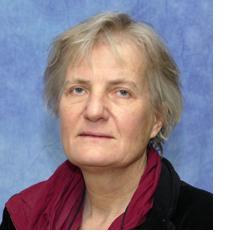 Erna Gille
ESLC Vice-Director (2010-2012)
Erna holds a 'doctoraal' in Theoretical Literature studies with a minor in Applied Linguistics from Utrecht University. As a Research Assistant she assisted Jan van Ek in developing his Threshold Level. She worked as a qualified teacher of English in Dutch secondary education from 1973 to 1992. She joined Cito in 1992 to develop tests of English as a foreign language and to work as a language consultant in many countries. She was National Project Manager for PISA in the Netherlands from 2002 to 2010 and National Research Coordinator in the Netherlands for SurveyLang from 2009.

Karen Ashton
ESLC Project Manager
Karen holds a PhD in cross-language comparability of reading proficiency from the University of Cambridge and an MA in Forensic Linguistics from Cardiff University. She joined Cambridge ESOL in 2004 to work on Asset Languages, which is a multilingual language proficiency framework of assessments available in the UK. Her role for Asset Languages included managing the research agenda, managing external consultants, researching areas of comparability, the impact of assessments, and standard-setting for performance assessments. She is PRINCE2-qualified to practitioner level and previously worked as a risk management consultant, a Research Assistant and a teacher of English in Japan.

Rebecca Stevens
ESLC Project Assistant
Rebecca holds a BA in Linguistics from University College London and is currently studying for an MSc in Forensic Linguistics. She has previously worked on innovative speech-to-text technology and in people management. In her current role as Project Assistant, she is responsible for ensuring smooth communications between the Project Management team and the National Research Coordinators across Europe so that the project is delivered on schedule.